

Rhine Hall Community Impact Through Events and Nonprofit Partnerships

A community space proves its value when people gather for more than a good time. At Rhine Hall, events are not treated as one-night moments on a calendar. They are chances to bring people together, support causes that matter, and turn hospitality into something useful for the neighborhood.
That community-first spirit shows up in many ways. It can be seen in fundraisers, donation drives, benefit nights, local collaborations, cultural gatherings, and partnerships with nonprofit organizations that serve real needs. Some events raise money. Some collect supplies. Some introduce guests to a mission they may not have known about before. Others simply give people a welcoming place to connect.
Rhine Hall’s impact comes from that mix. The venue is more than a place to host events. It is a place where local energy can become support for schools, families, artists, service groups, animal rescues, food programs, health organizations, and other nonprofit partners doing steady work in the community.
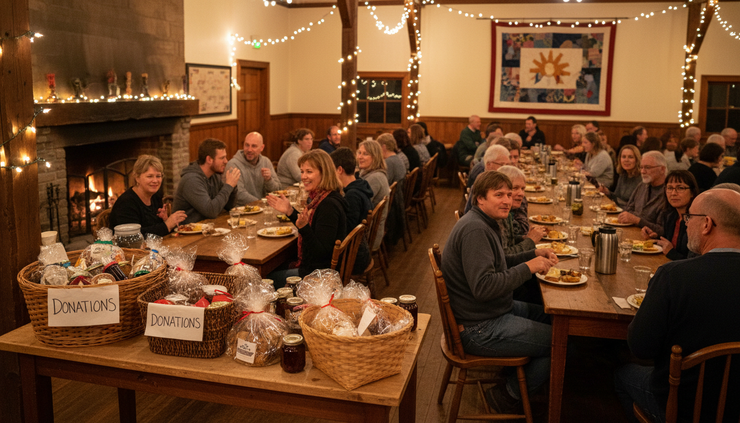
Community support starts with showing up
The strongest community work often begins with something simple: people deciding to show up.
Events make that easier. A fundraiser, tasting, neighborhood night, or nonprofit gathering gives people a clear reason to leave the house and connect with a cause. Guests may come for the event itself, but they leave with a better understanding of the people and organizations serving the community every day.
That is where Rhine Hall has found a meaningful role. By opening its space and supporting a wide range of causes, Rhine Hall helps lower the barrier between nonprofits and the public. A person who might not attend a formal campaign event may gladly come to a relaxed community gathering. Someone who has never donated to a local organization may give for the first time after meeting the people behind the work.
This kind of support matters because nonprofits often depend on visibility as much as funding. They need people to know who they are, what they do, and how to help. Events create that moment of connection in a natural way.
A community-driven event can help a nonprofit:
Reach new supporters in a welcoming setting
Raise funds through ticket sales, raffles, auctions, or shared proceeds
Collect needed items such as food, clothing, school supplies, or pet care goods
Thank volunteers and donors in person
Tell their story to people who may become long-term supporters
For Rhine Hall, the goal is not only to host a full room. The goal is to help make that room useful.
Events create a bridge between celebration and service
Many people think of events as celebrations, and they should be. Community spaces are where birthdays, launches, reunions, tastings, seasonal parties, and special nights come to life. But when those gatherings include a nonprofit partner, the celebration gains a second purpose.
That purpose can be built into the event in several ways.
A benefit night might direct a portion of sales to a local cause. A launch party might include a donation station. A seasonal event might collect winter gear or pantry items. A themed gathering might highlight an arts group, youth program, shelter, or health-focused nonprofit. A private event might choose a charitable partner in place of traditional favors or gifts.
These moments work because they meet people where they already are. Giving becomes part of the experience, not a separate task. Guests can enjoy the night while also taking part in something generous and real.
That is the heart of Rhine Hall’s community impact through events and nonprofit partnerships. The event brings people in. The mission gives the gathering meaning. The partnership helps turn attention into action.
The best events do not feel forced. They give guests an easy way to participate:
A clear donation table near the entrance
A short welcome that explains the nonprofit’s work
A simple raffle or silent auction
A signature item tied to the cause
A QR code or printed card for follow-up support
A volunteer or nonprofit representative available for questions
Small choices like these can change the feeling of a room. Guests do not feel pressured. They feel invited.

Nonprofit partnerships work best when they feel personal
A strong nonprofit partnership is not only a transaction. It is a relationship built on trust, respect, and shared purpose.
Rhine Hall’s community work reflects that idea. The venue can support many types of organizations because community needs are not limited to one area. One nonprofit may focus on food access. Another may support students. Another may offer services for families, older adults, artists, animals, or people facing hardship. Each mission has its own story, and each deserves to be treated with care.
That personal approach matters. Nonprofits are often working with limited time and resources. They need partners who understand that an event is not just about logistics. It is about helping the organization feel welcomed, seen, and supported.
A thoughtful event partner pays attention to details such as:
How the nonprofit wants to explain its mission
What kind of support would help most
Whether the event should feel celebratory, reflective, educational, or casual
How guests can stay involved after the night ends
What the organization needs beyond the event itself
Sometimes the best support is a big public event. Other times it is quieter. A donation drive, a hosted gathering for volunteers, or space for a smaller community moment can matter just as much.
The guiding question stays the same: what would genuinely help this organization and the people it serves?
When that question leads the planning, the event becomes more than a venue rental or a calendar listing. It becomes a shared effort.
A good community event makes giving feel approachable
People are often more generous than they realize. The challenge is that they may not know where to start. A community event gives them a starting point.
It also makes giving feel human. Guests can see the donation bins fill up. They can hear a nonprofit leader speak for a few minutes. They can meet volunteers. They can ask questions. They can understand why a local organization matters without reading a long report or attending a formal meeting.
That face-to-face connection is powerful.
For example, a guest may not know that a nearby food program needs steady support throughout the year, not only during the holidays. A family attending a seasonal gathering may learn about a local school supply drive. Someone who comes for a fun night out may discover an animal rescue that needs foster homes, supplies, or volunteers. A guest who enjoys art, music, or cultural events may find a nonprofit working to keep creative programs accessible.
That is the value of bringing nonprofits into community spaces. It turns awareness into something people can feel and act on.
Rhine Hall’s role is to help create those moments. The space, the staff, the event format, and the welcoming atmosphere all help make giving less intimidating. Guests do not need to be major donors to make a difference. They can bring a bag of supplies, buy a ticket, share a cause with a friend, join a raffle, or sign up to volunteer.
Those actions may seem small on their own. Together, they help build a stronger community.

The many forms of impact
Community impact does not always look the same. That is one reason events are such a useful tool. They can adapt to the needs of the nonprofit and the people being served.
At Rhine Hall, that impact can take many forms.
Fundraising that supports real work
Fundraising events help nonprofits cover the costs behind their mission. That may include program supplies, outreach, meals, transportation, creative materials, animal care, family services, or other day-to-day needs. Even when an event raises a modest amount, it can still help move important work forward.
It also gives the nonprofit a chance to build relationships. A guest who attends one event may become a repeat donor, volunteer, or advocate.
Donation drives that meet immediate needs
Some needs are practical and urgent. Canned goods, coats, hygiene items, school supplies, toys, pet food, and household basics can make a direct difference for the organizations that collect and distribute them.
Donation drives work well because they make support tangible. Guests know exactly what to bring and why it matters. A simple list of requested items can turn an ordinary event into a useful collection effort.
Volunteer appreciation and community recognition
Nonprofit work depends on people who give their time. Volunteers sort donations, mentor students, serve meals, make calls, foster animals, organize events, and support programs in countless quiet ways.
Hosting moments of appreciation helps remind volunteers that their work is seen. It also helps build morale, which is essential for long-term service.
Awareness that lasts beyond the event
Not every impact can be measured right away. Sometimes the most meaningful result is awareness. A guest hears about a cause for the first time. A neighbor learns where to get help. A family finds an organization that serves someone they love. A volunteer finds a mission they want to join.
Those connections can last far beyond the night of the event.
Community work is built one partnership at a time
A single event can help, but lasting impact comes from consistency. Rhine Hall’s commitment to helping the community is shown through repeated support, ongoing openness, and a willingness to work with different kinds of nonprofit partners.
That commitment matters because community needs change. A neighborhood may need food support one season, school supplies the next, and warm clothing later in the year. Artists may need space to gather. Families may need resources. Service organizations may need visibility. Nonprofits may need both funds and friends.
A venue that stays engaged can respond to those changing needs in practical ways.
That does not mean every event has to be large. Smaller gatherings often create strong connections because they feel personal. A room full of people who care can have a real effect, even without a huge production. What matters is the intention behind the event and the follow-through after it ends.
Strong community partnerships often share a few qualities:
Clear purpose
Welcoming atmosphere
Practical support
Ongoing connection
Guests understand who the event supports and how their participation helps.
People feel comfortable attending, asking questions, and taking part.
The event is planned around what the nonprofit actually needs.
Guests leave with a way to stay involved after the event.
When these pieces come together, an event becomes more than a gathering. It becomes part of a larger culture of care.

Hospitality can be a form of service
At its best, hospitality is not only about serving drinks, setting up tables, or creating a pleasant atmosphere. It is about making people feel welcome enough to participate.
That kind of welcome has power. It brings in people who may not see themselves as donors. It gives nonprofits a platform without making the experience feel stiff. It helps neighbors meet neighbors. It creates a setting where generosity feels natural.
Rhine Hall’s event work shows how much a local gathering place can do when it chooses to be part of the community, not separate from it. The impact is found in the partnerships, the conversations, the donation boxes, the benefit nights, the volunteer appreciation events, and the guests who leave with a new cause in mind.
A strong community is not built through one gesture. It is built through many moments of showing up, sharing resources, and making space for people who are doing good work.
Rhine Hall continues to be driven by that purpose: helping the community, supporting nonprofit partners, and using events as a way to bring people together for something meaningful. The next event may last only a few hours, but the support it creates can reach much further.


Comments